Surfaces That Look Custom Without the Cost
Decorative Concrete in Charlotte for driveways and patios requiring both durability and visual appeal
Vail-Wise Construction installs decorative concrete throughout Charlotte using stamp mats that replicate flagstone, herringbone, cobblestone, and Roman slate patterns. The process transforms standard concrete slabs into surfaces that mimic high-end materials while maintaining the structural performance concrete provides. Property owners choose this approach when they want the appearance of natural stone or brick pavers without the maintenance issues those materials develop over time.
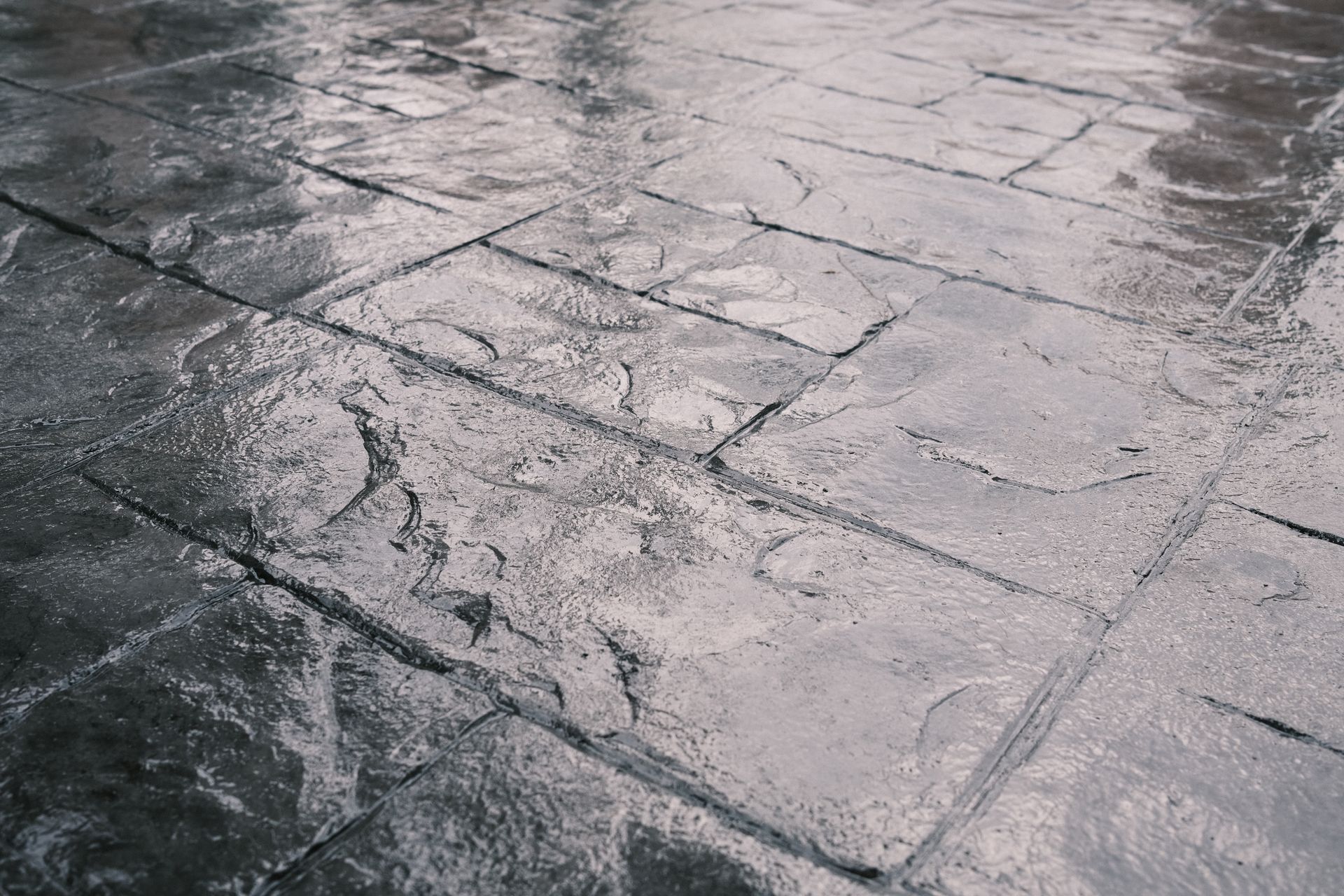
The work begins with demolition of the existing patio or driveway, followed by substrate preparation that addresses both drainage and long-term support. Once the base is graded correctly, fresh concrete is poured and stamped with textured mats before it fully cures. These mats create impressions that replicate the joints, surface variation, and dimensional depth of materials like flagstone or cobblestone, with patterns often visible on driveway aprons where decorative concrete transitions to standard slabs.
Schedule a property evaluation to determine the substrate condition and appropriate pattern selection for your project.
How Stamped Concrete Replicates Natural Materials
After the old surface is removed, the substrate undergoes grading adjustments that direct water away from structures and prevent settling in areas where soil compaction varies. Proper drainage slope is critical because decorative concrete performs identically to standard concrete in terms of water resistance, but the stamped joints can collect debris if water pools rather than sheets off the surface. The pour timing coordinates with mat application so the concrete remains workable enough to accept deep impressions without tearing or sticking.
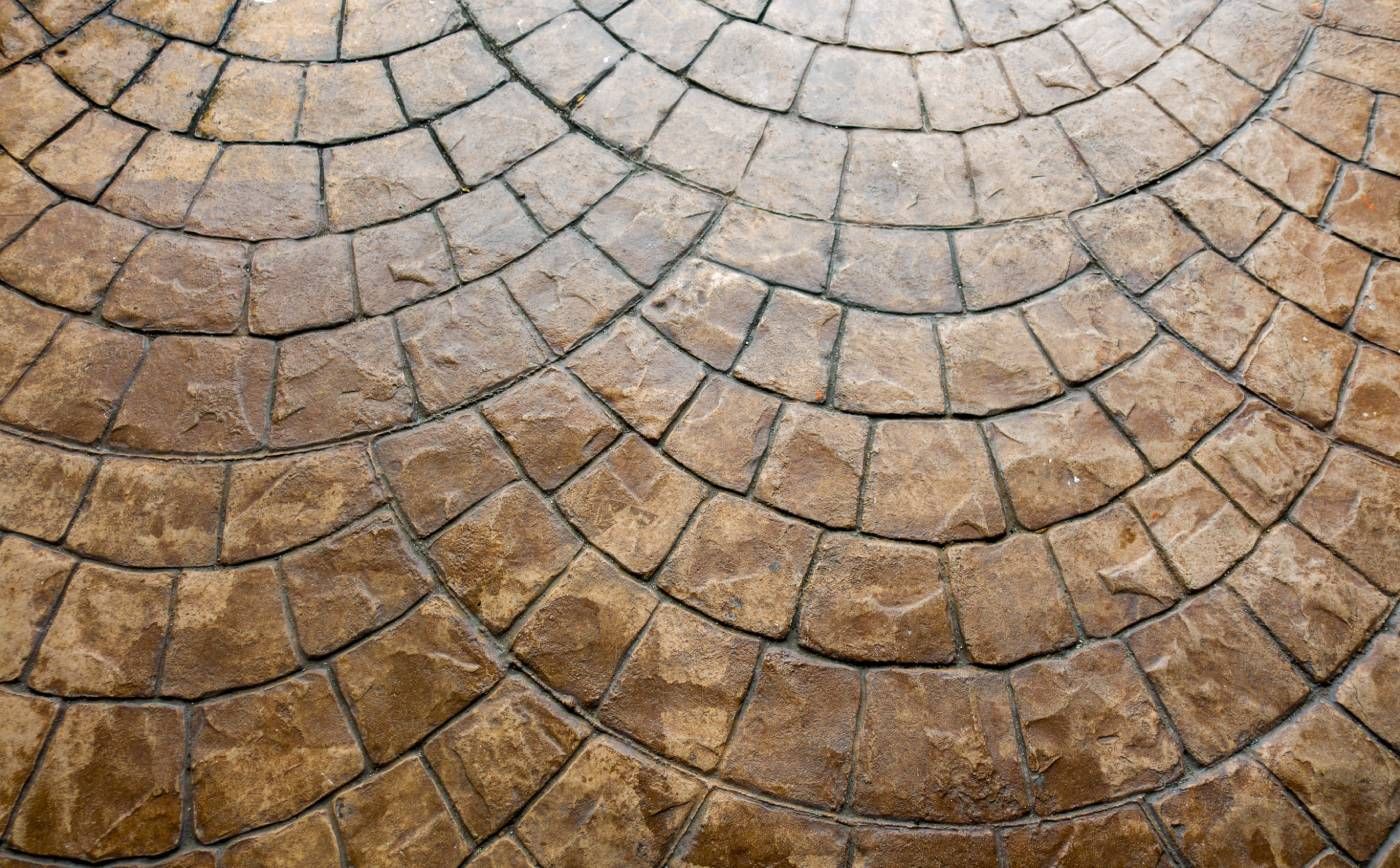
Once the stamped surface cures, you notice defined joint lines between individual stone or brick shapes, texture that mimics natural cleft or weathered edges, and dimensional variation that breaks up the flat appearance of standard concrete. The pattern remains permanently impressed into the slab rather than applied as a surface coating. Driveway aprons stamped in herringbone or cobblestone create a visual transition between decorative and functional concrete sections without requiring different materials or installation methods.
Pattern selection affects the visual scale of the finished surface, with larger flagstone patterns covering more area per impression and smaller cobblestone creating dense, repetitive texture. Roman slate provides linear directionality that can visually elongate narrow walkways or patios. The substrate preparation remains identical across all patterns, but mat placement sequences differ based on the geometric requirements of each design.
Questions About Installing Stamped Concrete
Homeowners considering decorative concrete for driveways or outdoor living areas typically ask about pattern durability, substrate requirements, and how the process differs from standard flatwork.
- What happens to the stamped pattern over time? The impressions remain permanent because they are formed into the concrete structure itself rather than applied to the surface. Normal wear affects decorative concrete the same way it affects standard slabs, with the pattern texture intact even as the surface ages.
- How does substrate preparation differ from standard concrete work? The grading and compaction requirements remain identical, but drainage slope becomes more critical because stamped joints can trap standing water if the surface does not shed moisture properly. Charlotte's clay soils require particular attention to compaction in areas where fill was previously added.
- Why do driveway aprons often feature decorative concrete while the main slab does not? The apron serves as a visual transition between the street and the home, creating curb appeal without requiring the entire driveway to be stamped. This approach concentrates decorative investment in the most visible section while maintaining cost efficiency across larger poured areas.
- What determines which pattern works best for a specific project? Flagstone suits larger patios where broad, irregular shapes complement open space. Herringbone and cobblestone fit driveways and walkways where geometric repetition reinforces directional flow. Roman slate works well in narrow areas where linear patterns visually widen confined spaces.
- When should demolition of the existing surface happen instead of pouring over it? Any surface showing settlement cracks, drainage problems, or substrate failure requires removal so the base can be regraded and properly compacted. Pouring decorative concrete over compromised substrate transfers those structural issues to the new slab, causing premature pattern cracking along the same failure lines.
Vail-Wise Construction handles substrate grading, demolition, and stamped concrete installation as a complete process, with pattern selection matched to the visual scale and functional requirements of your driveway or patio. Request an on-site consultation to review existing surface conditions and discuss which stamp mat patterns align with your property's architectural style.